> For the complete documentation index, see [llms.txt](https://wiki.ukenn.top/llms.txt). Markdown versions of documentation pages are available by appending `.md` to page URLs; this page is available as [Markdown](https://wiki.ukenn.top/seedbox-wiki-1/seedbox-you-hua-linux-de-can-shu.md).
# SeedBox优化Linux的参数
https\://post.smzdm.com/p/654616/
Linux这个系统,说心里话我也是个小白,对于服务器如何优化,也是google了一大堆文章,最终实测了一下,发现效果还是不错的,亲身经历,法国这台15欧的服务器,原先只能跑到30mb/s的速度,经过优化之后是真的跑到了80mb/s,基本上达到了这台服务器的满速带宽。不过有一个缺点就是不太稳定,我也在尽力的寻找更加妥善的优化速度的方案。所以,如果你觉得你服务器耐折腾,你觉得目前你的服务器速度让你不是很满意的,或者喜欢专研的小伙伴。可以尝试根据我提供的方法进行一些优化设置。**(优化有风险,操作需谨慎,重装是常事)**
特别提醒:如果你正在用rutorrent进行下载,请先停止下载任务。因为优化后需要重启系统。所以会导致正在下载的文件下次启动的时候会重新校验**!强烈建议在优化的时候不要有任何下载行为**,因为不怕一万就怕万一,如果优化出错,导致系统打不开等等之类的就得不偿失了。
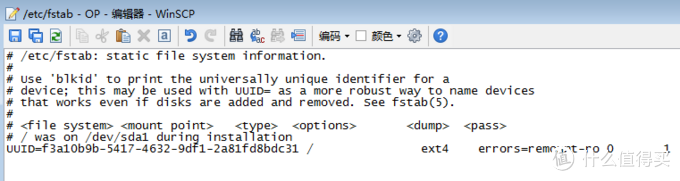
## **1、WinScp编辑文件:/etc/fstab*****(建议略过该步有严重BUG)***
[](https://post.smzdm.com/p/aex7kv3/pic_32/)
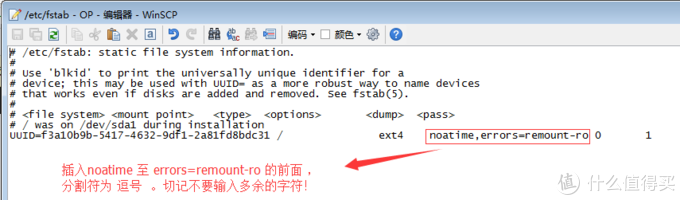
## **2、插入代码 noatime 到 errors=remount-ro 的前面** 分隔符为逗号(请参考下图)然后保存!***(建议略过该步有严重BUG)***
[](https://post.smzdm.com/p/aex7kv3/pic_33/)
这一步的目的是,让系统不给文件做时间记录,因为我们在进行PT下载的时候,会有大量的硬盘读写行为,而默认情况下linux会把文件访问的时间atime做记录,比如最近一次的访问时间、最近的一次的修改时间等等。所以这里我们设置为 noatime 将会显著提高磁盘 IO 的效率、提升文件系统的性能。 (其实按照google上面的说法 加入data=writeback 也能提高IO,问题是,我加入了这个参数后,部分服务器失败,只有一台成功。因为自己技术有限,也不知道什么原因导致的,所以稳妥起见,还是不要加入这个了,只需要 noatime 这个参数就行。)
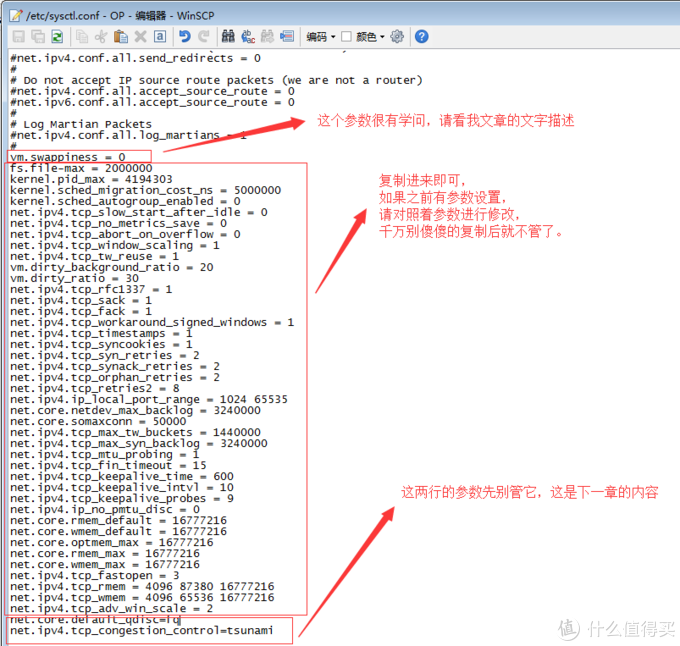
## **3、WinScp编辑文件:/etc/sysctl.conf** (把下面的文本复制到这个文件底部,**注意最后要有1个换行符**)
```
vm.swappiness = 1
fs.file-max = 2000000
kernel.pid_max = 4194303
kernel.sched_migration_cost_ns = 5000000
kernel.sched_autogroup_enabled = 0
net.ipv4.tcp_slow_start_after_idle = 0
net.ipv4.tcp_no_metrics_save = 0
net.ipv4.tcp_abort_on_overflow = 0
net.ipv4.tcp_window_scaling = 1
net.ipv4.tcp_tw_reuse = 1
vm.dirty_background_ratio = 20
vm.dirty_ratio = 30
net.ipv4.tcp_rfc1337 = 1
net.ipv4.tcp_sack = 1
net.ipv4.tcp_fack = 1
net.ipv4.tcp_workaround_signed_windows = 1
net.ipv4.tcp_timestamps = 1
net.ipv4.tcp_syncookies = 1
net.ipv4.tcp_syn_retries = 2
net.ipv4.tcp_synack_retries = 2
net.ipv4.tcp_orphan_retries = 2
net.ipv4.tcp_retries2 = 8
net.ipv4.ip_local_port_range = 1024 65535
net.core.netdev_max_backlog = 3240000
net.core.somaxconn = 50000
net.ipv4.tcp_max_tw_buckets = 1440000
net.ipv4.tcp_max_syn_backlog = 3240000
net.ipv4.tcp_mtu_probing = 1
net.ipv4.tcp_fin_timeout = 15
net.ipv4.tcp_keepalive_time = 600
net.ipv4.tcp_keepalive_intvl = 10
net.ipv4.tcp_keepalive_probes = 9
net.ipv4.ip_no_pmtu_disc = 0
net.core.rmem_default = 16777216
net.core.wmem_default = 16777216
net.core.optmem_max = 16777216
net.core.rmem_max = 16777216
net.core.wmem_max = 16777216
net.ipv4.tcp_fastopen = 3
net.ipv4.tcp_rmem = 4096 87380 16777216
net.ipv4.tcp_wmem = 4096 65536 16777216
net.ipv4.tcp_adv_win_scale = 2
```
[](https://post.smzdm.com/p/aex7kv3/pic_34/)
这一步的目的是修改Linux的内核参数,主要优化TCP等协议参数,调优网络质量。如果你之前就有过这方面的设置,或者用过别的脚本,比如开启BBR的时候顺带优化了这个参数。可以参考如上配置进行适当的修改即可。(What?啥是BBR? 好吧,那是下一篇文章主要讲解的内容)
值得一提的是 vm.swappiness = 1 这个参数是告诉服务器对SWAP 分区的依赖程度。这样说很难理解,你可以把它理解为windows的虚拟内存。当物理内存不足时,会调用这个虚拟内存作为补充使用,从而使得系统稳定。那么虚拟内存大家都知道是存放在硬盘上的。所以过多的使用SWAP,也就会造成过多的读写硬盘,那么你的硬盘IO速度就降低了。所以,通过调整vm.swappiness这个参数的值,可以告诉linux系统如何使用SWAP。一般默认情况下他的值是60,如果你内存足够大,比如25欧的那款服务器有16G的内存,完全用不掉啊,就可以设置为1。我这里设置的是0,当然不是禁用了SWAP,而是告诉系统能少用就少用,能不用就不用。具体怎么选择看亲们自己定吧
## **4、WinScp编辑文件:/etc/security/limits.conf** (把下面这些参数给复制进去)然后保存!
```
* soft nofile 2000000
* hard nofile 2000000
root soft nofile 2000000
root hard nofile 2000000
```
[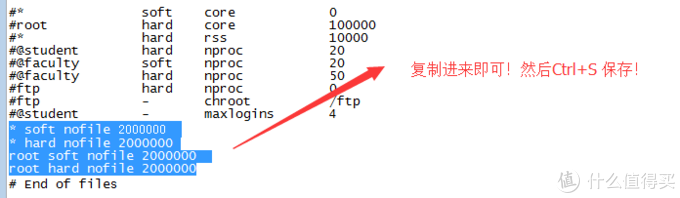](https://post.smzdm.com/p/aex7kv3/pic_35/)这一步的目的是,增加最大打开的文件数,对于PT下载这种频繁使用到文件读写的。当然得调整了。
## **5、Putty输入命令: reboot** (重启一下服务器,使得我们刚才所有的设置生效)